
Toothpick Project / Toothpick Company Ltd.
BiopesticidesBiocontrol
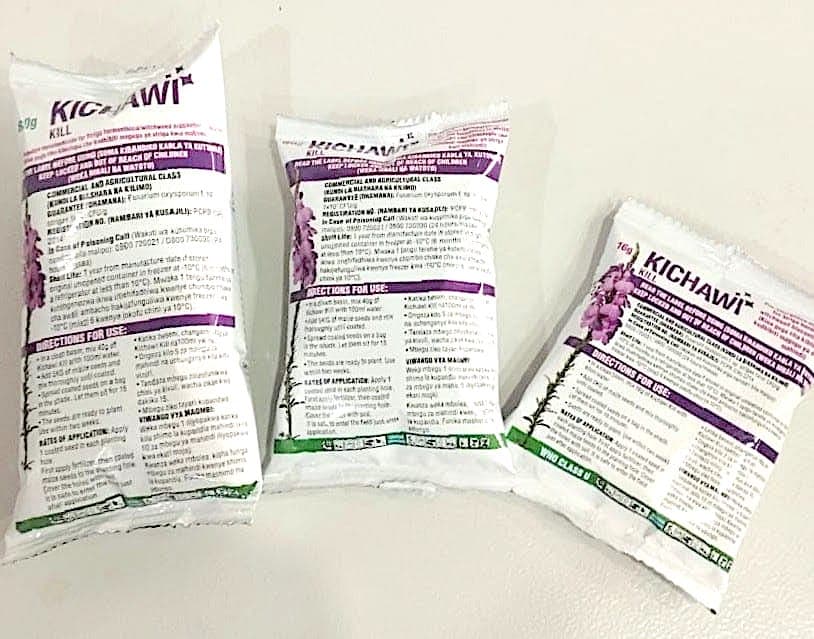
The Toothpick Project has developed and commercialized one of the first bioherbicides in the world. The single target weed is Striga (witchweed), and invasive parasitic weed that attacks the roots of staple crops like maize and sorghum, reducing crop yield up to 100%. 50 million hectares of croplands (~40 million farms) in sub-Saharan Africa show Striga infestation, causing $9+ billion in crop loss annually. Striga forms an intense soil seed bank by adding over 10,000 seeds per season. The seeds spread easily across farms through wind, human and animal traffic, and farming tools. Toothpick Project's beneficiaries, smallholder farmers, are generally below the poverty level of $2.15/person per day. After decades of research and development with team members from three continents, our technology uses a strain of endemic Kenyan fungus, Fusarium oxysporum f.sp. strigae, selected for over-production of specific amino acids to kill striga but not crops. The resulting product, Kichawi Kill (kichawi means ‘magic’ in Swahili), is a groundbreaking approach to striga management and global weed management. Proof-of-concept trials took place in 2014-2015, showing a 42-56% increase in yield (Gates Foundation). The fungi were originally grown on toothpicks and delivered to the village level for a secondary inoculum production. With this method, the technology went through regulatory protocol for six years and launched commercial distribution in 2021. In 2023, the improved seed coating product was approved in Kenya, significantly reducing the price and increasing the shelf life. On average, farmers are seeing a 450kg maize yield increase per acre (with the $15.50 cost to treat an acre, this is an 8-12x return on the farmer's investment). Expansion efforts to Uganda started in 2024, followed by other sub-Saharan Africa countries in 2025. The mission of the Toothpick Project is to create and implement a biological solution for the problem of Striga (witchweed, the worst weed in Africa) with a focus on providing smallholder farmers access to our biological innovation that improves their welfare, food security, and financial stability. We strive to maintain biodiversity through our targeted approach, and also prevent herbicide resistance. As a breakthrough technology, our vision is to be a catalyst that shifts weed management globally to safer, effective, biological solutions. The Toothpick Project is a nonprofit organization in the United States (donations are welcome) with commercial social enterprises in each country of operation. Toothpick is included in the UN World Food Program Innovation Portfolio; the Welthungerhilfe Innovation Portfolio; MacArthur Foundation’s Bold Solutions Network; the TAAT Innovation Portfolio (Technologies for African Agricultural Transformation); and the delivery package from USAID Feed the Future Innovation Lab – Current and Emerging Pest Threats. Recent awards include: Sankalp Africa Award Winner 2024; FAO Seeding the Future World Food Forum Youth-Led Innovation Leadership Award 2024; MassChallenge Alumni Winner 2024; Food Planet Prize 2023 Finalist; Milken-Motsepe Agritech Prize Finalist 2023. Co-founders include world renowned scientists, Dr. David Sands (Professor Emeritus, Montana State University) and Dr. Peter Lüth (founder of Prophyta GmbH). NOTE: We can adapt our technology to other weeds. Please contact us to explore opportunities for these developments.
Products from Toothpick Project / Toothpick Company Ltd.
Watch Toothpick Project / Toothpick Company Ltd.
Public profile facts
- General Purpose
- Biocontrol
- Product Type
- Biopesticides
- Crop Category
- Cereal & Oilseed Crops